
The Pruning Mistake That Creates Water Sprouts (and Costs You Fruit, Time, and Money)

The Problem Made Visible
I walk the same roads through Eastsound most mornings.
It’s an old habit now. After enough years, a walk like that becomes a way of orienting yourself. Collar up against whatever the strait is sending inland that day, moving slowly through the town before it fully wakes. Thin light. Air thick with brine.
Over time you begin to notice the small continuities. What returned. What didn’t.
About ten years ago I started paying attention to a small orchard in town. Old trees. Apples mostly. Not ancient, but old enough to carry the posture of trees that have seen a few owners and a few philosophies of pruning. The sort of orchard you notice if you spend your life looking at fruit trees.
Every spring a crew arrives.
You can tell the day they’ve been there before you even see the trees. The branches scattered on the grass give it away first. Then the canopy. Cleaned up. Thinned out. The sort of work that looks good from the road. Uniform. Symmetrical. Like money well spent. The trees stand there afterward with that look we like. Order imposed. Symmetry corrected. Promises made.
And then the following spring the same thing appears again.
Vertical shoots, dozens of them, climbing out of the scaffolds like antennae. Thin, fast growth racing straight upward as if the tree were trying to escape its own shape. Water sprouts everywhere.
A year later the crew returns. The sprouts are removed. The canopy is shortened again. It looks tidy for a few months.
Then the shoots return.
I’ve been watching the same cycle repeat itself for nearly a decade. Every year the same trees, every year the same cuts, every year the same response from the tree itself. A quiet argument between biology and habit playing out above the grass.
Trees can handle a great deal of cutting. They are built for damage. But most of the time they don’t need to.
The trees weren’t misbehaving. They were responding exactly the way a tree does when its canopy is headed the same way year after year.
The crew wasn’t fixing a problem. They were maintaining it.
Walking past those trees again this morning, seeing the fresh cuts flash bright against the bark, I decided I would write about the cycle—and how to break it.
Because once you see it, you start seeing it everywhere.
Why Does a Tree Create Water Sprouts?
The reason those shoots appear isn’t mysterious. It’s written into the way a tree grows.
At the tip of every branch sits the apical bud. That bud produces a hormone called auxin, which moves downward through the stem and suppresses the buds behind it. As long as the apical bud remains intact, most of those lateral buds stay quiet. The branch extends outward under a kind of biological hierarchy.
Botanists call this apical dominance.
Remove the apical bud with a heading cut and that dominance disappears. The auxin signal stops. Dormant buds along the branch are suddenly released.
Several begin growing where before there had been only one.
At the same time the root system below the soil continues doing exactly what it was doing before the saw touched the tree. It is still absorbing water. Still pushing minerals upward. Still supplying stored carbohydrates through a vascular system sized for a much larger canopy.
The tree suddenly has more energy than structure.
So it answers the only way it can. It grows fast.
The new shoots race upward toward light, rebuilding the leaf area that was just removed. Long, thin, vertical growth bursting from the scaffolds.
Those are the water sprouts.
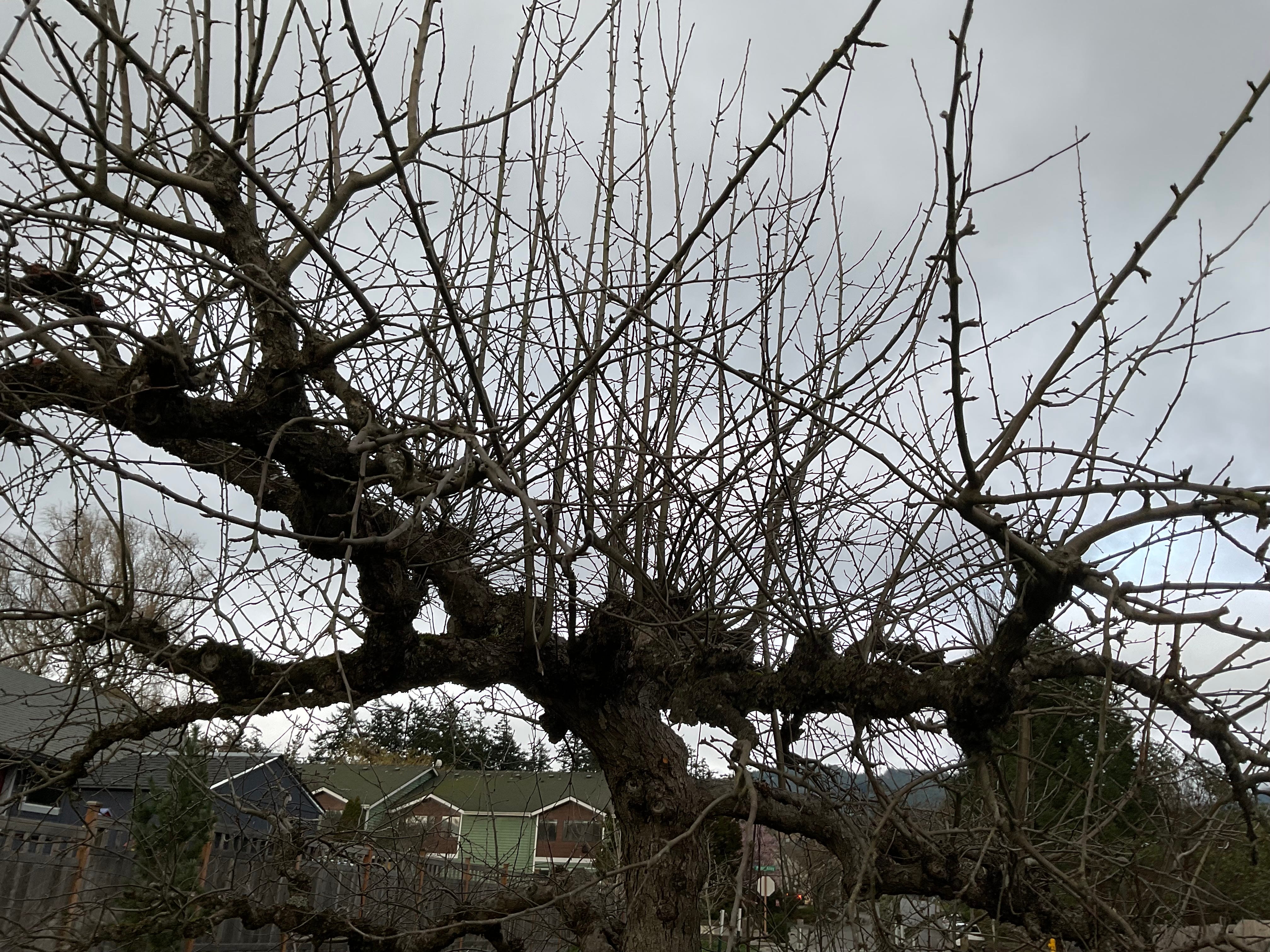
But water sprouts aren’t useless wood. Given time, many will eventually settle down and produce fruit, though often high in the canopy and difficult to reach.
Sprouts can also serve other purposes. Occasionally one becomes structural, filling the space left by a broken limb or a branch lost to age.
But here’s the problem.
When a tree is pushed into this kind of regrowth year after year, the canopy fills with vigorous vertical shoots. Light disappears from the interior. Fruiting wood weakens. Air movement slows inside the tree, and in maritime climates that kind of congestion creates the damp conditions where disease thrives. As orchardists like to say, sunlight and air are the best fungicides. The tree ends up spending its energy rebuilding structure instead of producing fruit.
And when winter returns, the same shoots that filled the canopy are cut away again.
Which sends the tree right back into the same response.
That’s the cycle.
So the cuts meant to improve the tree slowly begin doing the opposite. And when the same heading cuts are repeated every year, the same response follows every year.
Which is exactly what those old apples in town have been demonstrating for the better part of a decade.
The Cut Heard Around the Orchard
The cycle usually begins with a particular kind of cut.
In pruning there are two basic moves: heading cuts and thinning cuts.
A heading cut shortens a branch. Somewhere along the limb the saw or pruners remove the growing tip and leave the rest of the branch in place.
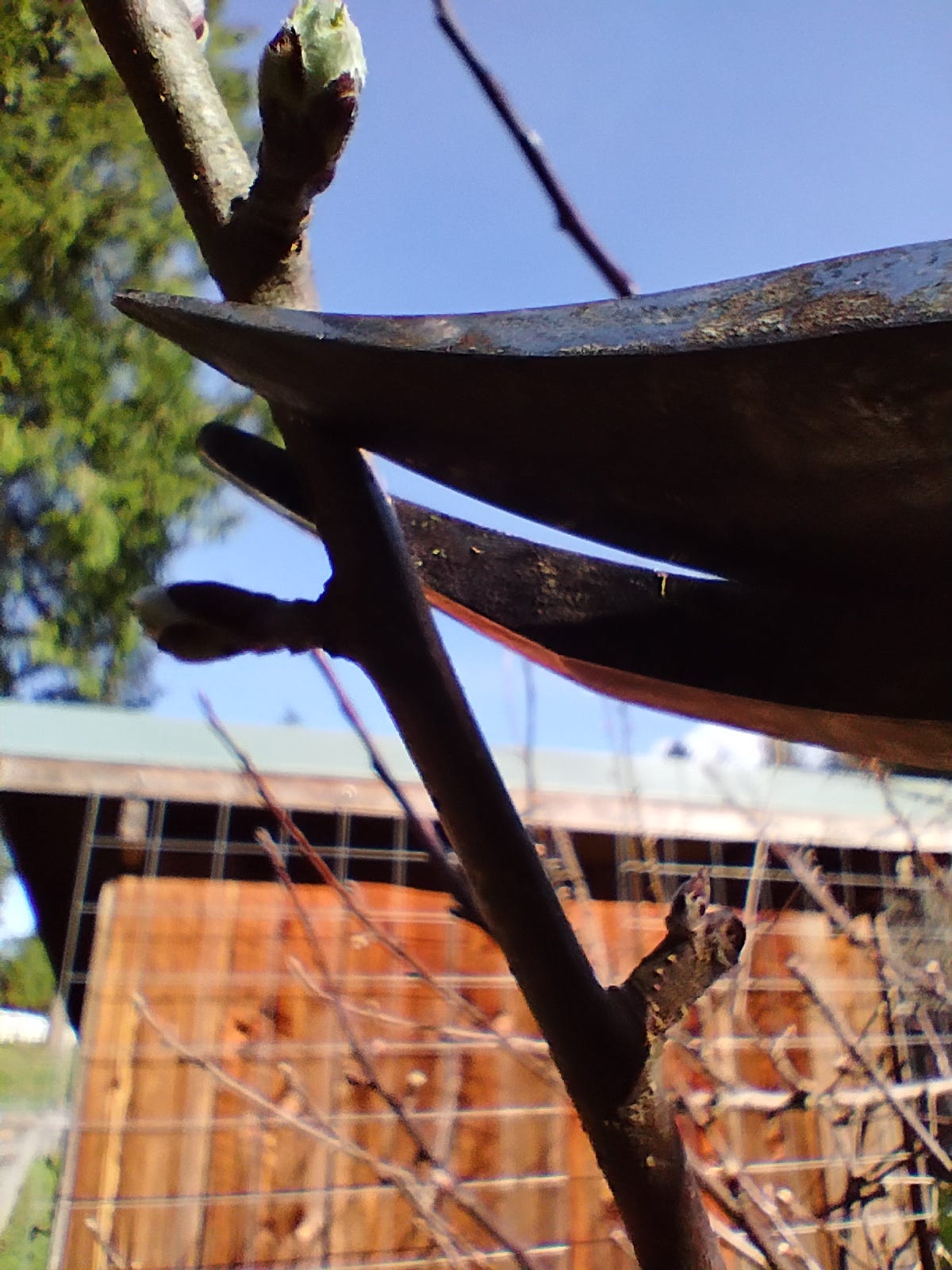
When that happens, the apical bud disappears. The auxin signal stops. The buds behind that cut, lower down the branch, are released from suppression.
Several shoots often emerge where there had been only one.
That response is predictable. It is the biology of apical dominance doing exactly what it was designed to do.
A thinning cut works differently.
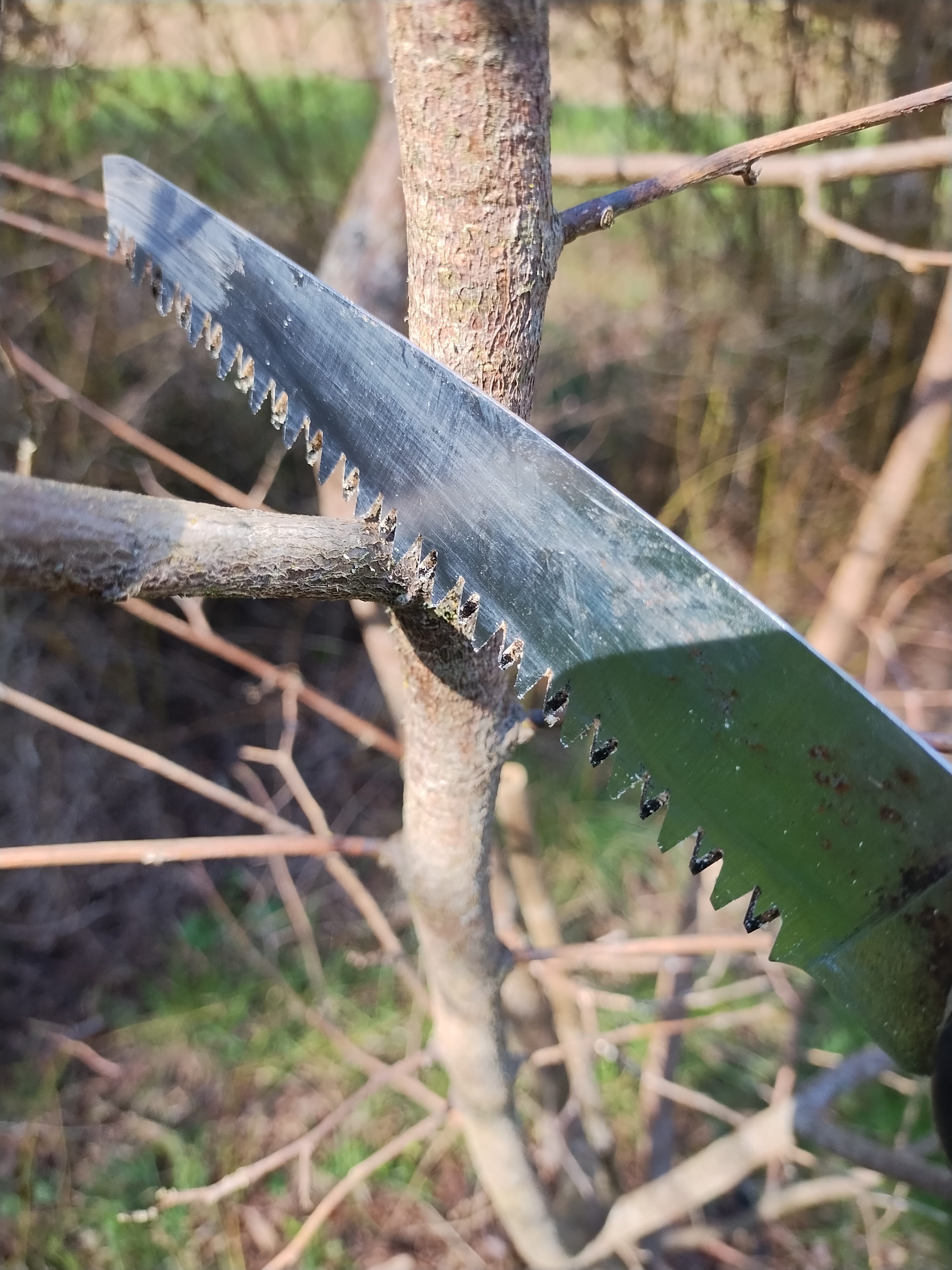
Instead of shortening a branch, the entire limb is removed back to its point of origin. One branch leaves the structure completely while the rest of the canopy remains intact.
Because the neighboring branches still carry their apical buds, the hormonal balance of the tree stays largely undisturbed. The tree loses some wood, but the overall structure and hierarchy remain in place.
Thinning cuts tend to calm a tree. Heading cuts tend to wake it up.
Neither is inherently wrong.
Young trees often need heading cuts to establish structure. A branch sometimes needs shortening for clearance, safety, or to redirect growth. Used carefully, heading cuts can shape a tree well.
But when mature fruit trees are shortened repeatedly in the same places, year after year, the tree receives the same signal over and over again.
The apical bud disappears. Dormant buds wake up. Water sprouts follow.
The result is the cycle those old apples in town have been demonstrating for years: a tidy spring canopy, followed by a summer explosion of vertical shoots, followed by another round of cuts the next winter.
Not because the tree is unruly. Because the instructions being given to it never change.
That’s the cycle. The good news is the cycle can be broken.
Can the Cycle be Broken?
Orchardists correct trees like this all the time. It isn’t permanent damage and it isn’t the end of the tree. But it does take a little patience. A canopy that’s been shorn the same way for years doesn’t return to balance in a single season.
With the right approach the structure settles again. Light returns to the interior. Fruiting wood comes back. The yearly surge of water sprouts fades as the canopy and root system come back into alignment.
Some of the corrective work is surprisingly simple. A few cuts in the right places. Sometimes a branch is removed. Sometimes a vigorous shoot is bent, redirected, or converted into fruiting wood instead of cut away.
The key is restraint. And over time the tree stops fighting you.
Once the balance is restored, the pruning becomes lighter. The tree holds its shape, and the yearly cycle of heavy pruning disappears.
Because once you understand why the cycle happens, correcting it becomes less about controlling the tree and more about guiding it back into balance and keeping it there.
Restoring a Tree That’s Caught in the Over- pruning Cycle
Breaking the cycle takes more than one winter.